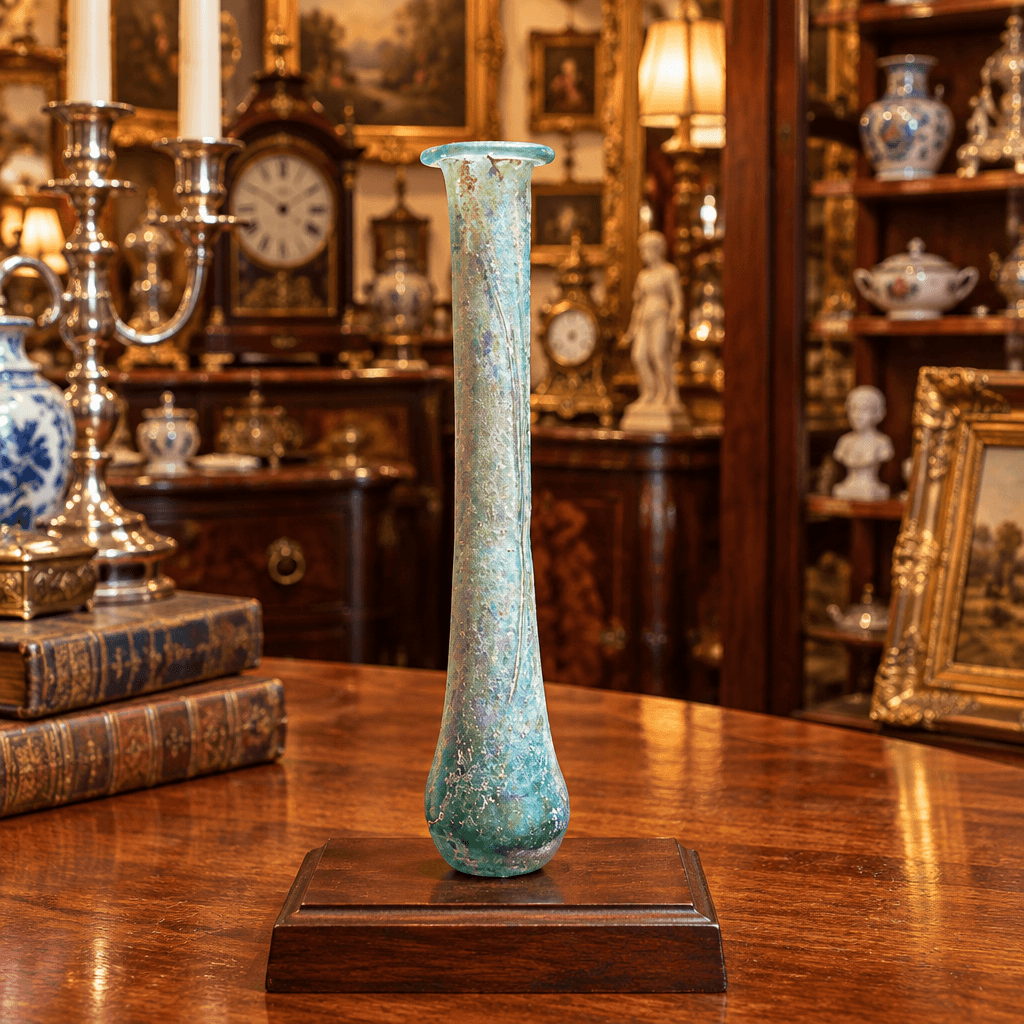
Individually cataloged by Mark & Jody. Ready for prompt, insured dispatch from Tampa, FL.
Roman Glass Unguentarium
Curatorial Story & Cultural Heritage
An ancient Roman glass unguentarium perfume phial with iridescent patina. Roman glassblowers across the empire, particularly in workshops in the Levant and Alexandria, created vessels of various forms for daily utility. These delicate containers were made to hold precious oils, perfumes, and cosmetic unguents used in both personal grooming and mortuary rituals. The blown glass technique, invented in the 1st century BCE, allowed artisans to produce thin-walled vessels much faster than older core-forming methods. Romans of all social strata used small perfume phials for daily hygiene at the baths and during private toilette. These unguentariums were frequently placed inside tombs as offerings alongside the deceased, preserving their contents through centuries underground. Over long periods of burial, chemical reactions between the glass and surrounding soil developed a distinctive silvery iridescence on the surface. Period: Circa 1st-3rd Century Origin: Roman Empire